
First You Dream, Then You Die: A Cinematic Guide to Fate, Free Will, and Psychic Reality
November 6 @ 7:00 pm - 9:00 pm PST
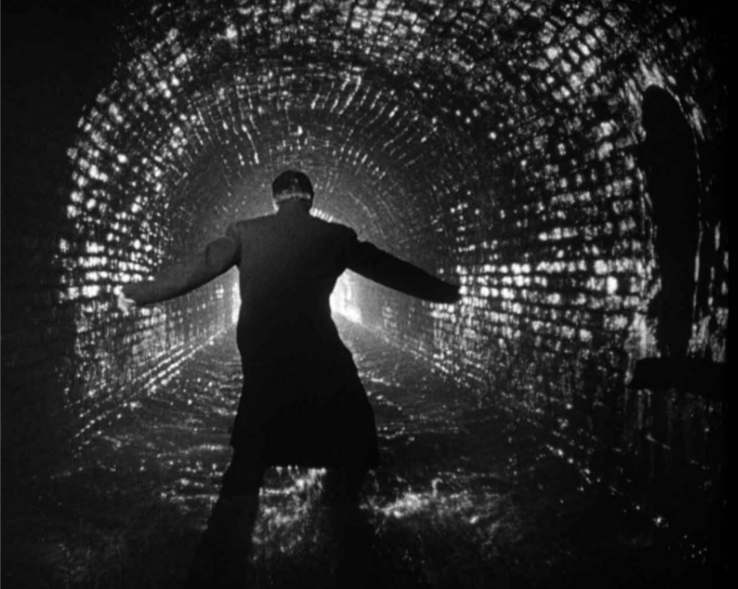
C. G. Jung championed the view of fate and destiny as one’s path in life, dictated and even preordained by the Objective Psyche. This unconscious dimension of the human psyche guides a person along the path toward fulfilling the process of individuation.
Aniela Jaffé, one of Jung’s closest colleagues, expressed the relationship between fate and destiny:
“The future does not really come into being but is already existent in some form. It appears to be unavoidable and unchangeable, and that brings us the age-old question of the freedom of human will…. One can almost say that man’s freedom consists of being able either to struggle against fate or to accept it.”
The Jungian conception of a person’s fate and destiny as predestined—and lacking, to a large degree, in free will—can be a disturbing idea. To better understand this view, we can look at certain themes in movies from the 1940s, when a particular film genre dominated the films being released during that tumultuous era.
That genre, film noir, dramatized the struggle of protagonists against a fate they considered to be a malevolent force driving them down a disastrous path in life. As one film noir protagonist expressed it:
“Fate, or some mysterious force, can put the finger on you or me for no good reason at all.”
This lecture will explore more deeply the relationship between the Jungian conception of fate and destiny and the film noir perspective. It will examine how these views both mirror and differ from one another, and how fate may either doom a person to self-destruction or lead to an experience of self-transformation and the fulfillment of the process of individuation.
JIM KLINE, PH.D., received his PhD in psychology with a specialization in Jungian Studies from Saybrook University in San Francisco. He currently serves as a professor of psychology at Northern Marianas College (NMC).He has published numerous articles in Jungian-oriented professional psychology journals and is the author of The Otherworld in Myth, Folklore, Cinema, and Brain Science (Cambridge Scholars Publishing, 2019). His most recent publication is Nonrational Logic in Contemporary Society: A Depth Psychology Perspective on Magical Thinking, Conspiracy Theories, and Folk Devils Among Us (Routledge, 2023). He currently resides in southwestern Washington.
$5.00Add to cart
