WHO WE ARE
We are a non-profit 501(c)(3) educational organization dedicated to exploring the ideas of C.G. Jung and those who have been inspired by him. Since 1974, we have been presenting Friday Talks and Saturday Workshops in Portland led by Jungian analysts and scholars from around the world. We also stream these programs to all who cannot attend in person.
Our Jungian library offers books, journals, recordings of past programs, and a beautiful setting to encourage exploration and community. We welcome lay and professional people in all stages of life and with varying levels of familiarity with Jung’s work. Non-members are welcome at all of our programs.
OUR MISSION
The purpose of the Oregon Friends of C. G. Jung (OFCGJ) is to further the knowledge of and interest in Jungian psychology. OFCGJ recognizes it as worthwhile for individuals pursuing their own psychological development to come together regularly for personal growth and fellowship.
OUR STORY
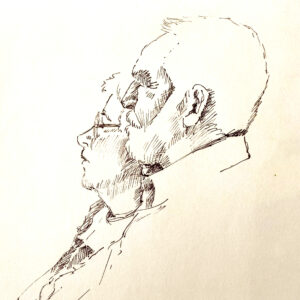
In the early 1970s, an era of emerging social consciousness and individual exploration, fifty people responded to an advertisement in a small, local newspaper, The Lake Oswego Review, and gathered under a shade tree in the backyard of founder, Dottie Kyle, to share ideas about Jungian psychology.
They were hungry for discussion and community. Oregon Friends of Jung was born out of this gathering of seekers.
Before long, those early OFCGJ members began inviting leading Jungians to Portland as a way of nourishing themselves and serving the community. Programs with Joseph Campbell, James Hillman, Edward Edinger, Joseph Wheelwright, Marion Woodman, Jean Bolen, Anthony Stevens, and Thomas Moore attracted attendees from around the state, and beyond.
OFCGJ TODAY
Oregon Friends of Jung is a 300-member volunteer organization, supported by a lay Board and an Executive Director, and dedicated to carrying on the intent of those early organizers. We are committed to the following:
- Presenting fresh and innovative Jungian ideas, delivered by speakers with expertise, depth and integrity
- Making programs and our extensive library available to our community
- Running our organization in a way that respects the individuation process of our members
When we invite speakers from across the United States, Europe, and around the world, we ask them, “Where is your work taking you now? What’s giving you energy?” Presenters (most of whom are analysts) respond with enthusiasm, often proposing a more evolved approach compared to what they’ve presented elsewhere. Some speakers prepare new material especially for us. Their fresh ideas and thoughtful insights bring a palpable energy to the weekends, and help us draw audiences of 200 or more to our Friday evening presentations.
All of our Friday Talks and Saturday workshops are open to the greater community. We consciously provide a range of topics and experiences, aware that our attendees’ individual typologies, familiarity with Jungian ideas, and personal interests generate engagement and a variety of thoughtful responses to our annual eight-weekend season of programs. As a lay organization, we draw diverse audiences from a wide spectrum of professions, including a sizeable minority of members in the helping professions. Speakers have often commented on the stimulating, heartfelt quality of audience questions posed during interactive segments of the Talks and Workshops.
As Oregon Friends of Jung continues to serve our community, we remain conscious of the vision of our founders: to humbly and with few organizational trappings, offer serious Jungian discourse to individuals who are searching for consciousness and meaning in their personal lives and in the world.